Antimicrobial resistance (AMR) is one of the most complex public health challenges facing communities today. For many people, the challenge of hard-to-treat infections begins before they may even understand AMR. With over 500 languages in Nigeria, there is a need to have a simple, familiar way to understand and express what AMR means.
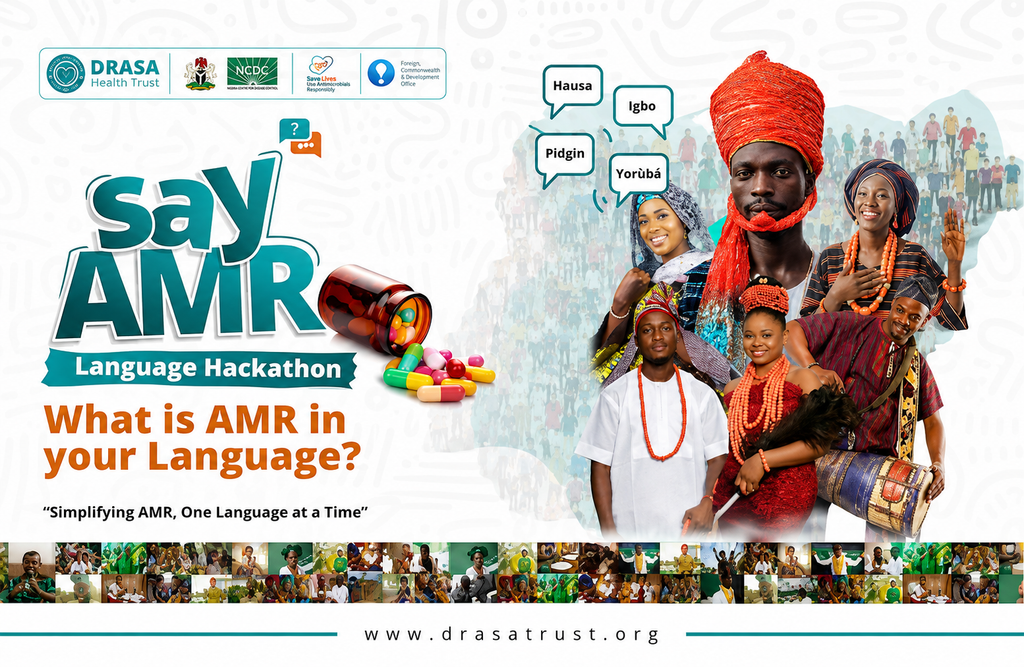
In Nigeria, the SayAMR Language Hackathon is testing a practical response to this communication gap by developing culturally relevant and scientifically accurate terminology for AMR in Hausa, Igbo, Yoruba, and Nigerian Pidgin. Led by Dr. Ameyo Stella Adadevoh (DRASA) Health Trust, in collaboration with the Nigeria Centre for Disease Control and Prevention (NCDC), the Centre for Infection Control and Patient Safety (CICaPS), and the Committee of Vice Chancellors of Nigerian Universities (CVCNU), the initiative engages multi-disciplinary university students, linguists, public health and AMR specialists, communication experts, and community representatives.
This initiative is offering an important lesson in AMR communication. Translation alone is not enough as effective communication must be scientifically accurate, culturally appropriate, understandable, memorable, and validated by the people expected to use it.
From translation to co-creation
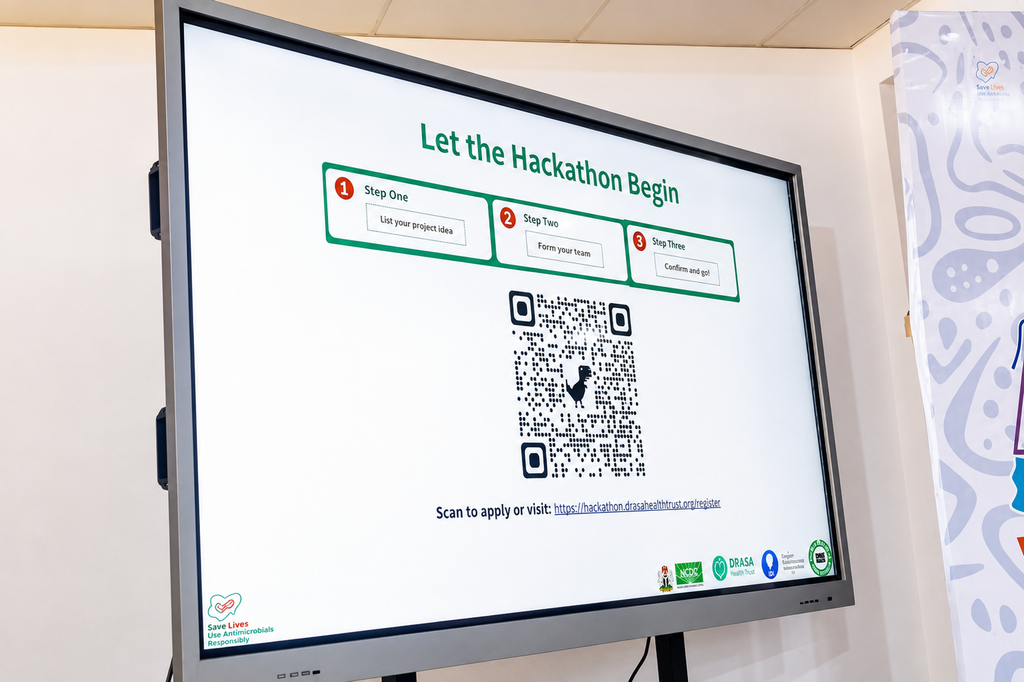
The SayAMR approach deliberately moved beyond finding direct translations for the term “antimicrobial resistance.” Following an open call to university students, respondents made a total of 35 submissions across the four language categories. 11 met the eligibility requirements and progressed to expert review.
The process combined technical expertise with community perspectives. Submissions were assessed through a two-round Delphi process. Shortlisted teams then defended their terminology through a structured debate held with a panel of experts in linguistics, public health, AMR and communication that further assessed argument, scientific accuracy, cultural sensitivity, community validation, delivery, and creativity.
The process produced four winning terminologies, one each in Hausa, Yoruba, Igbo and Nigerian Pidgin. The terminologies will be unveiled at a national event that will bring together key stakeholders of the SayAMR Language Hackathon. This is planned to be held in the last quarter of 2026. The Hackathon continues to demonstrate that familiar language can help communicate complex scientific concepts, and that important terminologies require careful scrutiny.
Putting communities at the center
Community validation was a critical part of the process. Participants from different demographic and stakeholder groups, including youth, adults, older people, traders, farmers, students, low-literacy populations, waste management field officers, and different categories of health workers, were engaged to assess the terminology.
This approach reflects an important principle for AMR communication, that communities should not simply be audiences for health messages; they should help shape the language through which those messages are communicated.
Lessons for AMR action
The SayAMR experience offers several lessons that can inform AMR communication efforts in other settings.
First, we prioritized meaning over literal translation. Scientific concepts do not always have direct equivalents in local languages. Terminologies should communicate the underlying concept, not merely reproduce individual words.
Second, we combined scientific expertise with community knowledge. AMR terminology must preserve scientific accuracy while remaining accessible to nontechnical audiences. The SayAMR process ensured the involvement of experts and community perspectives to achieve this balance.
Third, we validated language before scaling it. Terms that appear appropriate to experts may have different meanings when encountered by communities. Testing comprehension, recall, cultural acceptability, and practical usability can identify these issues before terminology is widely adopted.
Finally, we treated language as part of AMR action. Communication is not an add-on to AMR prevention and response. If people cannot understand the problem, recognize its relevance, or discuss it in language that makes sense to them, efforts to promote appropriate antimicrobial use and behavior change may struggle to reach their full potential.
The process of the SayAMR Language Hackathon has shown us that locally relevant language is a powerful tool for making AMR more understandable and inclusive. Its most important lesson is that to make AMR everyone’s concern, we must first make it something everyone can understand.