



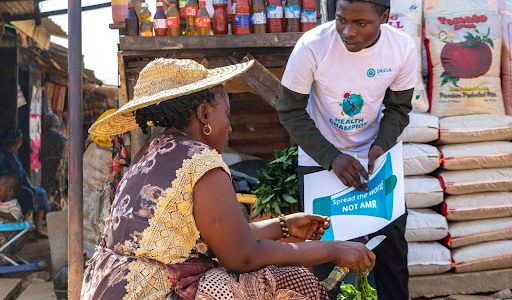
On a windy Saturday morning in Gombe, a group of university students stood at the edge of a busy market, holding placards that read “Antibiotics Are Not Painkillers” and “Finish Your Prescribed Dose of Antibiotics.” Shoppers slowed, curious. Within minutes, conversations sparked, about cough syrups, leftover medication, and the danger of antimicrobial resistance (AMR). For many in that crowd, it was the first time they had heard the term, AMR.
Antimicrobial Resistance (AMR) is a public health threat that needs to be tamed. This is why we partnered with the AMR Intervarsity Training Program (AMR ITP) to establish seven AMR clubs in seven universities across six states in Nigeria. The clubs developed 564 students into frontline advocates for responsible use of antimicrobials.
The intervention was born out of a clear gap. While Nigeria’s second National Action Plan on AMR emphasizes awareness and grassroots engagement, many young people, especially non-medical students, have limited understanding of AMR, yet they remain powerful change agents within their campuses and communities. The goal, therefore, was simple but ambitious: equip tertiary students with the knowledge, skills, and support to become AMR champions and establish sustainable AMR Clubs in their institutions.
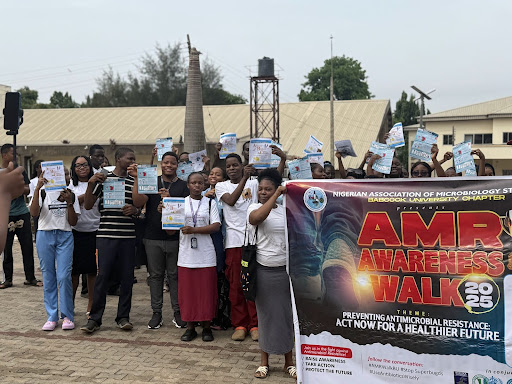
Over the course of nine months, the seven clubs became platforms for peer education, community outreach, and leadership development to bridge the gap in AMR education, awareness, and limited grassroots engagement.
Within the clubs, students learned about AMR through 20 structured training modules delivered through webinars and self-paced learning, and practical community outreach. The modules covered the causes of AMR; water, sanitation and hygiene; One Health; behavioural change communication; and advocacy, among other topics. With ongoing mentorship from global health and AMR experts, students gained the confidence and skills to translate complex AMR concepts into clear, relatable messages.
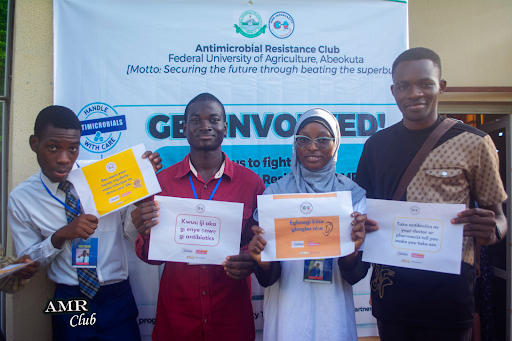
The impact quickly moved beyond campus walls. Across the six states, the seven AMR clubs led community engagements in ten schools, nine health facilities, eight marketplaces, and eleven religious institutions. These are spaces where trusted information on the use of antimicrobials is scarce. Using quizzes and demonstrations, students engaged community members in practical conversations about when and how to use antimicrobials, reaching approximately 27,416 people.
Post-training assessments showed that 80% of student participants improved their AMR knowledge, while community feedback reflected growing awareness and early behaviour change. In several locations, community leaders requested repeat sessions, demonstrating trust and relevance.
Students from Gombe State University, Benue State University, Babcock University in Ogun State, the Federal University of Agriculture in Abeokuta, the Federal University of Technology in Akure, Umaru Musa Yar'adua University in Katsina, and the University of Medical Sciences in Ondo, participated in the outreach activities, following their training.
Beyond numbers, the change was visible. Students who once struggled to explain the misuse of antibiotics were now confidently leading public demonstrations. “Their enthusiasm and the questions I received during the sessions made the mentorship deeply engaging,” noted Winifred Maduko, one of the program’s AMR mentors. Another mentor, Damilola Adesuyi, reflected, “I loved their passion for volunteering and their eagerness to learn, especially how they adapted AMR education to their local communities.”
The journey was not without challenges. Academic schedules, institutional bureaucracy, and limited baseline understanding of AMR occasionally slowed implementation. However, adaptive planning, mentor support, and strong accountability mechanisms helped clubs navigate these barriers.
Perhaps the most enduring lesson was this: when young people are trusted with knowledge, resources, and responsibility, they deliver impact far beyond expectations. Going forward, AMR Clubs plan to sustain campus education, deepen community partnerships, and mentor new cohorts, ensuring that awareness does not end with a single campaign, but becomes a culture.
After an outreach session, one student leader reflected, “Now, when people ask me for antibiotics, I don’t just say no, I explain why.”