



Communities are increasingly taking the center stage in disease prevention, because outbreaks often happen first in homes and neighbourhoods.
Accordingly, our Strengthening Community Participation for Disease Prevention and Early Detection (SCOPED) intervention, in collaboration with the Nigeria Centre for Disease Control and Prevention (NCDC) and state governments, builds on earlier findings from a pilot community health and hygiene project in Lagos, which saw weak community surveillance, low reporting rates, and limited engagement in prevention practices as critical gaps in health protection.
SCOPED is filling these gaps through our
Community Health Champions model. With this model, we equip everyday people to become Community Health Champions who promote healthy behaviors, identify risks early, and work with local authorities to prevent diseases.
DRASA and our government partners began this process by co-creating a more responsive, community-driven surveillance system. The goal was to fill in the existing disease prevention, detection, and reporting gaps and develop a model that can be scaled across the country.
But first, we needed to secure stakeholder buy-in for rollout and scale and ensure stakeholders moved from passive endorsement to active co-creation. Also, we needed to align priorities across states with different contexts, which required deep understanding and flexibility.

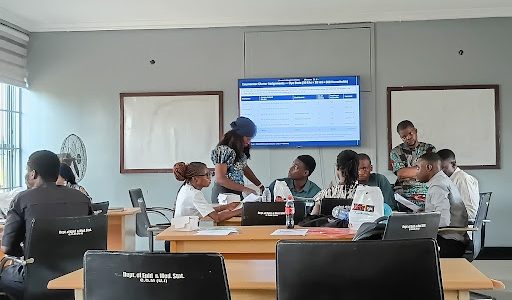
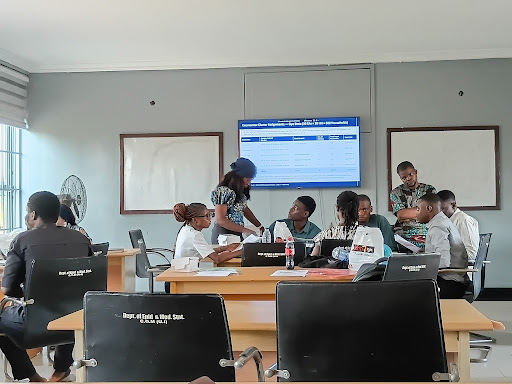
That is why advocacy meetings became the turning point. Around the table, partners discussed practical challenges from waste management to open defecation, and aligned on solutions tailored to each location. These sessions informed planning and built ownership among the local stakeholders we needed to successfully implement the Community Health Champions model.
The advocacy sessions directly engaged 26 high-level health officials and decision-makers across 3 states, laying the foundation for implementation of the SCOPED model in the selected Local Government Areas in each of the three target states.
As a result of these engagements, surveillance is not being viewed solely as a government function but as a shared responsibility with
Community Health Champions taking the lead. “We are now thinking beyond response and focusing on prevention at the source,” one Surveillance Officer pointed out during the discussions.
Now, there is a stronger emphasis on community ownership, clearer monitoring frameworks, and a full commitment to integrate Community Health Champions into local surveillance systems. These changes indicate readiness to allow communities to be active defenders of public health, beginning from their immediate environments.
DRASA and partners are now rolling out a scalable, community-led surveillance system that detects diseases early and prevents them from becoming an outbreak. As Dr. Ogbodo, Director of Public Health in Enugu State, reflects, the value of the Community Health Champion model lies in its simplicity and strength: “When communities are equipped and involved, prevention becomes possible.”
And in a world where the next outbreak is never far away, community leadership makes all the difference.