



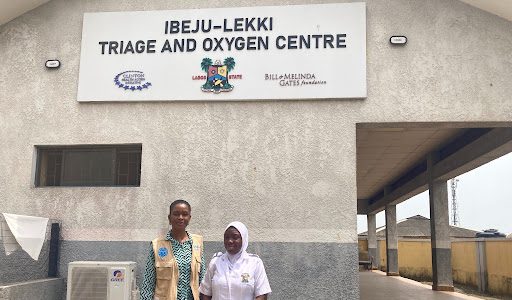
In three primary healthcare centres in Ibeju-Lekki, Lagos, infection prevention is becoming a daily discipline. At the centre of this are three nurses, our Health Champions: Nurses Fatimoh, Munirat, and Barakat, all serving as Infection Prevention and Control (IPC) Focal Persons in their respective facilities.
Their commitment to reducing preventable infections among patients and their colleagues is a result of the transformation that we led, developing them into Health Champions and continuing to provide on-the-job mentoring and supervisory support. Our aim is to move healthcare workers from increased knowledge to sustained practice.
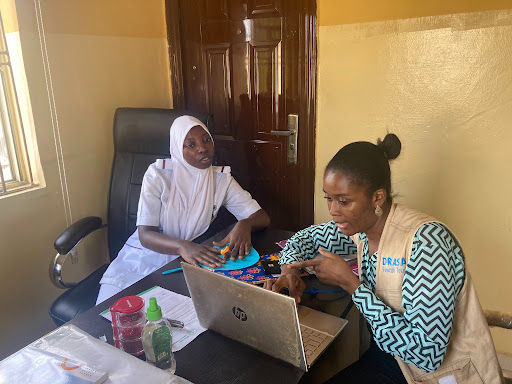
“We had the training,” Nurse Fatimoh explains, “but we needed to see if we were truly applying it, and improving.” Without structured monitoring, her progress and that of her colleagues was difficult to measure.
So DRASA introduced monthly mentoring visits using the National IPC Scorecard which turned routine supervision into a data-driven improvement process.
Across Awoyaya, Ibeju, and Bogije Primary Healthcare Centres, the DRASA team mentor works side by side with healthcare workers, reviewing action plans, identifying gaps, and co-creating practical and sustainable solutions.
Some of the solutions include developing an IPC bin card, which serves as a simple inventory record to monitor the utilization of IPC supplies to prevent shortages. Another solution was organizing peer learning refresher sessions to maintain best practices among other health workers in the facility.
Each stakeholder has played a role. Facility Officers-in-Charge led advocacy efforts, engaging local government authorities to secure funding for essential supplies such as gloves, waste bins, and fuel for water systems. Health Champions like Munirat became daily advocates of best practices; training colleagues, reinforcing hand hygiene, and ensuring compliance even during demanding shifts. DRASA provided continuous technical guidance, drawing the Health Champions’ attention to unsafe practices, and reinforcing learning through both facility visits and a digital community of practice.
The impact reached beyond a small leadership group. Before mentoring began, only two key staff - the Officer-in-Charge and IPC focal person - actively drove IPC efforts. The mentoring enabled at least 12 more healthcare workers and facility attendants in each centre to directly engage in improved IPC practices.
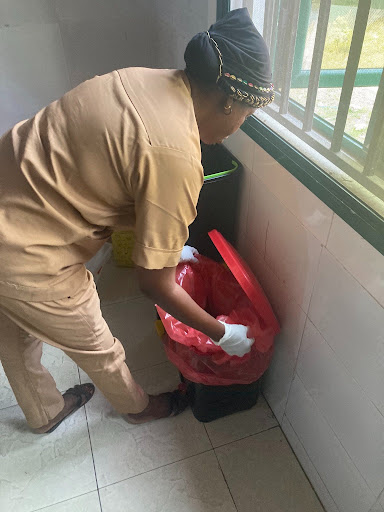
The mentoring also led to a shift in behavior. Hand hygiene compliance has improved significantly, even in challenging conditions. Waste management systems are now better understood and implemented, with staff correctly using colour-coded bins. The use of personal protective equipment has become more consistent. In one notable change, Barakat recounts how staff moved from using a single glove for multiple children during immunization to strictly using one glove per
patient. “We realized it was wrong,” she says. “Now, we do it properly every time.”
Daily routines have also shifted. Health attendants now clean and disinfect surfaces with greater attention to detail. Used medical devices are decontaminated promptly. Sharps are disposed of safely without risky handling. “Before, some of these steps were overlooked, especially when work became overwhelming,” Munirat notes. “Now, we remind each other and take responsibility.”
These improvements have not come without challenges. Water shortages and unreliable electricity initially made compliance difficult. At one point, handwashing required staff to step outside repeatedly, an impractical expectation during high patient flow. “You could attend to 20 patients and feel too tired to keep going outside to wash your hands,” Fatimoh recalls. Through sustained advocacy, facility leadership secured backup electricity and repaired water systems, ensuring a more reliable electricity and water supply.
Human factors also posed barriers. Some staff were initially resistant to change, while health attendants, often overworked, struggled to keep up with new expectations. However, regular mentoring, daily reminders, and practical demonstrations gradually built acceptance. “It was not easy to get everyone on board,” Barakat admits. “But now, we are working as a team.”
The qualitative impact is increasingly visible. Cleaners now pause to wash their hands after every task. Nurses now refuse to compromise on proper glove use, even during peak hours. Teams now hold brief discussions to reinforce IPC practices. The culture is shifting, from reactive care to proactive prevention.
“Infection prevention starts with us,” Munirat says. “If we don’t do it right, patients can leave worse than they came.”
Our efforts have also strengthened confidence and ownership among staff. IPC focal persons are not only implementing guidelines, they are tracking consumables, analysing gaps, and advocating for improvements.
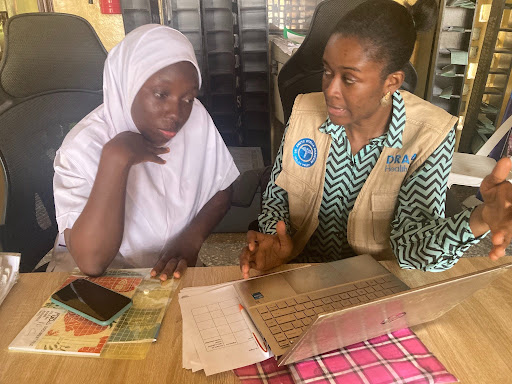
Across the facilities, key lessons have emerged. Continuous mentorship is essential to sustaining behaviour change. Access to supplies must match training efforts. And most importantly, teamwork is critical. “IPC is not a one-person job,” Fatimoh reflects. “Everyone has a role to play.”
Committed to continual improvement, the Health Champions emphasize the need for ongoing training, a consistent supply of IPC materials, and stronger collaboration within their teams.
Barakat adds, “The mentoring has shown us what is possible. Now, we want to keep improving.” Every cleaned surface, every properly discarded glove, and every washed hand is a step towards safer care for both patients and those who serve them.