Nigeria’s current Ebola outbreak has shown how quickly an infectious disease can become a public health emergency. Being prepared means knowing what to look out for, protecting health workers and patients, and ensuring communities know where to turn when concerns arise.
A Legacy That Calls Us to Prepare
In July 2014, when Ebola first arrived in Nigeria through an infected traveller, Dr. Ameyo Stella Adadevoh recognized the seriousness of the situation at a time when the disease was unfamiliar to Nigerians. She insisted that the patient remain isolated despite pressure to release him and her actions helped trigger the public health response that followed, but she contracted Ebola and died on 19 August, 2014.
Nigeria eventually contained the outbreak, recording 20 cases before being declared Ebola-free by the World Health Organization in October 2014.
Dr. Adadevoh’s story demonstrates the importance of early recognition, sound judgment, and decisive action in responding to public health emergencies. It is also a reminder of the cost of gaps in preparedness and the need for systems that enable health workers to quickly identify threats, access appropriate support, and protect themselves and the people in their care.
The Dr. Ameyo Stella Adadevoh (DRASA) Health Trust was founded in her memory, with a commitment to preventing infections and strengthening the systems that protect public health.

More than a decade later, our commitment remains relevant as Nigeria responds to another Ebola threat.
Nigeria's Current Ebola Response
On 20 October, 2026 in the Federal Capital Territory, Nigeria confirmed an imported case of Ebola disease caused by the Bundibugyo virus. The patient had travelled from Uganda to Nigeria and developed symptoms after arrival. Public health authorities initiated investigations, contact tracing, isolation, and other response measures.
On 26 October, the patient was medically evacuated to Switzerland for continued treatment. As of today, 62 contacts have been identified, with further investigations ongoing. WHO's outbreak update also highlights the wider regional situation across Africa, including ongoing transmission in the Democratic Republic of the Congo and imported cases in Kenya.
These developments underscore that infectious disease threats do not respect national borders. International travel and population movement mean that a disease outbreak in one country can have implications for many other countries.
Preparedness is about ensuring that the people, facilities, information systems, and institutions needed for a response are ready before the next suspected case appears.
The question now is whether every part of Nigeria’s system is sufficiently prepared to recognize a threat early, prevent further transmission, and protect communities.
DRASA’s support to the National and Subnational Ebola Response
As Nigeria continues its response to Ebola, DRASA is actively supporting the response at multiple levels, bringing our expertise in IPC, surveillance, community engagement and health workforce development to where it is needed most.
Serving at the heart of national coordination
DRASA is an active member of the National Emergency Operations Centre (EOC), participating in daily coordination meetings and contributing technical perspectives to national response planning and decision-making.
Through this platform, we are supporting the response across three critical pillars: Infection Prevention & Control (IPC), Surveillance, and Risk Communication & Community Engagement (RCCE).
Extending the response beyond the facility
We are also using our established Community Health Champion network to take accurate Ebola information into communities in 4 states. DRASA and NCDC Ebola awareness materials have been shared to strengthen community understanding of prevention, early recognition and appropriate response.
We also conducted an interactive Ebola knowledge assessment and quiz with Community Health Champions, helping reinforce accurate information and prepare community-based champions to support awareness and early alerting.
Mobilising a trained IPC workforce
Our support to Nigeria is also drawing on a growing pool of trained infection prevention and control (IPC) professionals.
In collaboration with NCDC and Centre for Infection Control and Patient Safety (CICaPS), DRASA convened a virtual engagement with the alumni network of the Diploma in IPC , creating a rapid channel to cascade Ebola preparedness and prevention information and mobilise more than 250 certified IPC professionals to support the national response.
Why this matters
Our contribution goes beyond individual activities to connect national coordination with frontline action.
From the EOC, to health facilities, to trained health professionals, to Community Health Champions, we are helping ensure that disease preparedness is translated into action where risks are quickly recognised and managed for Ebola or any other threat that may emerge.
When Ebola Walks Through the Door, the First Few Minutes Matter
In an outbreak, a health facility can become the first line of defence or a point of transmission. The difference can come down to what happens in the first few minutes after a potentially infectious patient walks through the door.
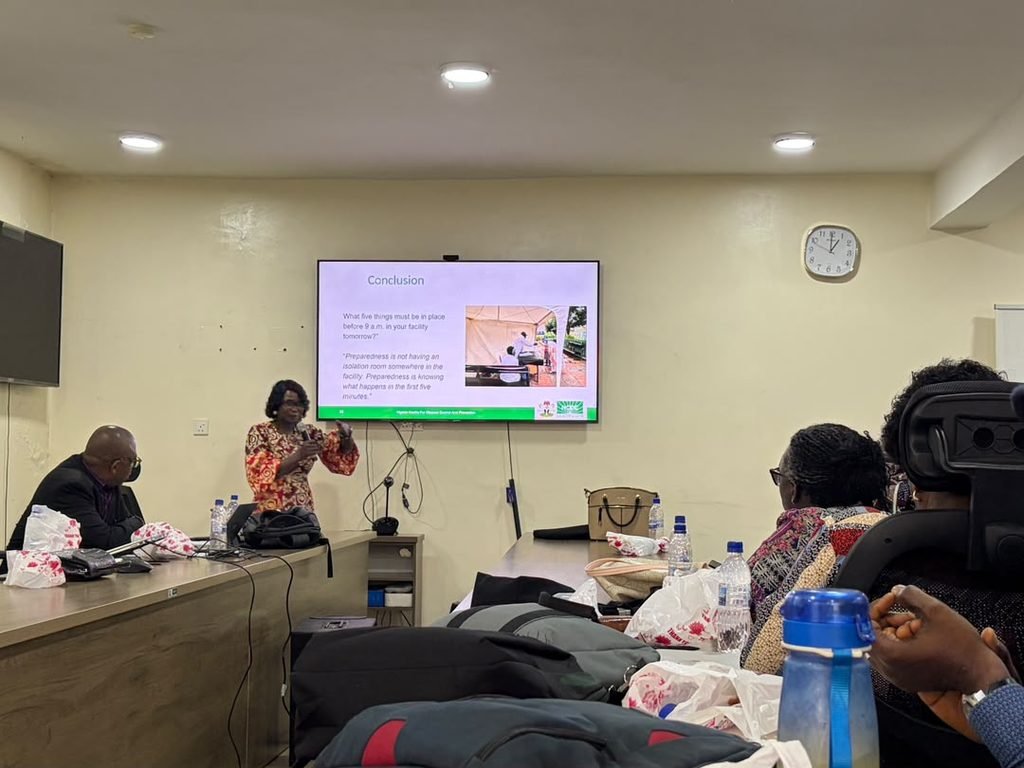
In support of the Nigeria Centre for Disease Control and Prevention (NCDC) and the ongoing national Ebola response, we facilitated a practical Infection Prevention and Control (IPC) session on Ebola screening and triage for 50 public and private healthcare workers in the Federal Capital Territory - the epicentre of Nigeria’s current Ebola outbreak. The goal was to ensure that frontline health workers are equipped to recognise risk early, act safely and connect suspected cases to the response system.
Through realistic clinical scenarios and decision-making exercises, participants explored how to recognise warning signs and epidemiological risk, safely separate patients, protect healthcare workers and others, and promptly escalate suspected cases through the appropriate response channels.
At the heart of the session was the triage principle we requested all participants commit to do:
Screen. Isolate. Notify.
As Nigeria continues to strengthen its response, we remain committed to supporting national and subnational efforts to build safer health facilities, stronger health systems, and a prepared frontline workforce.
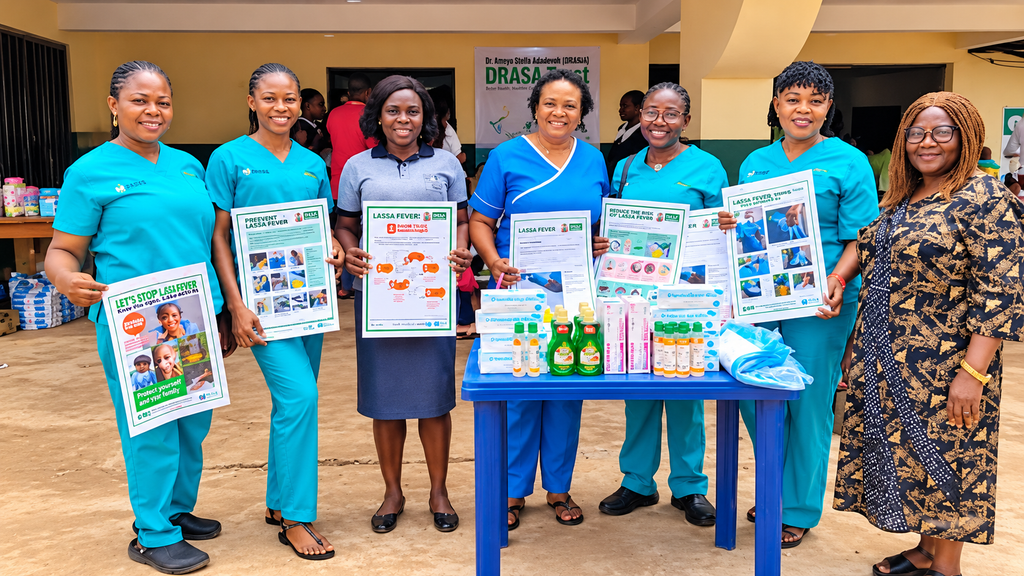
Beyond training, DRASA also supported 15 health facilities with IPC supplies and IEC materials on standard precautions, helping facilities strengthen the basic infection prevention measures that protect patients, health workers and communities during an outbreak.