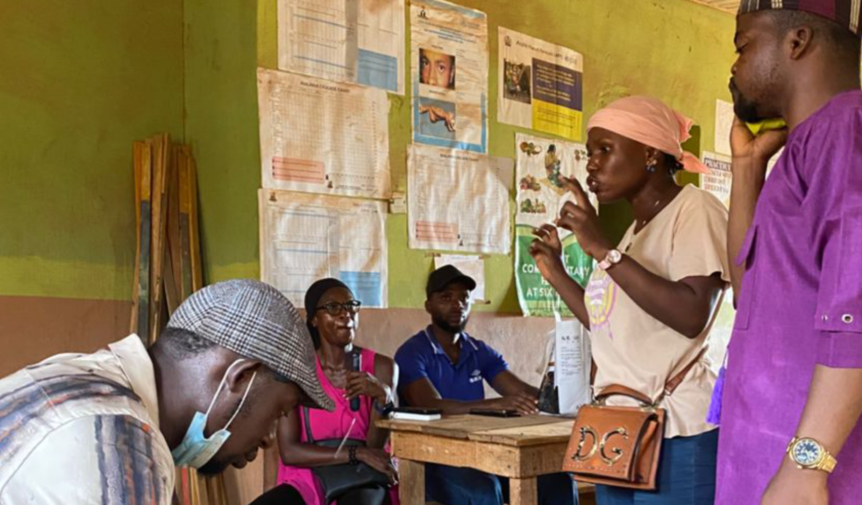
When a case of diphtheria was confirmed in Ona Ara Local Government Area (LGA) of Oyo State, the response needed to go beyond identifying the infection. Families needed reliable information, students and teachers needed to understand the warning signs, and parents needed an opportunity to ask questions about vaccination and make informed decisions about protecting their children.
This was where DRASA’s network of trained Community Health Champions stepped in.
Working alongside state government health authorities, Champions visited households in the affected community to sensitise residents about diphtheria and support active case search. Their visits helped bring public health information directly to people who needed it, while supporting efforts to identify individuals who might require further assessment.
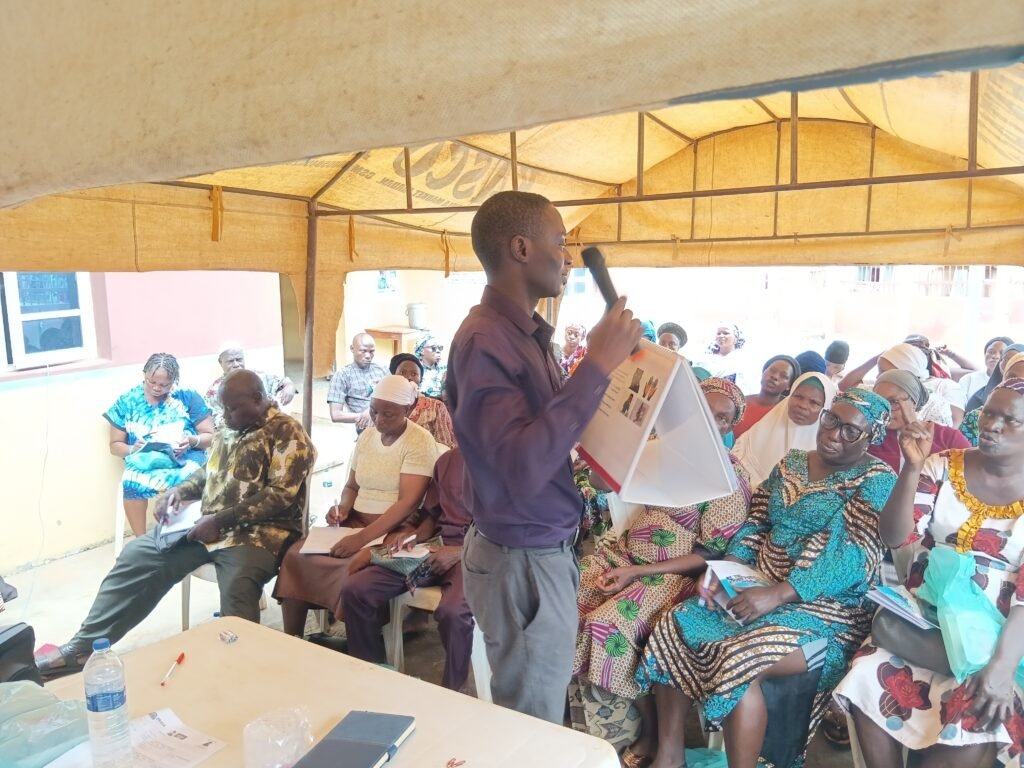
Their response also extended to a local school, where they spoke with students and teachers about recognising the signs and symptoms of diphtheria and the importance of seeking medical care promptly.
But the school visit revealed another important part of the response which was that some parents were hesitant about government vaccination programmes conducted in schools.
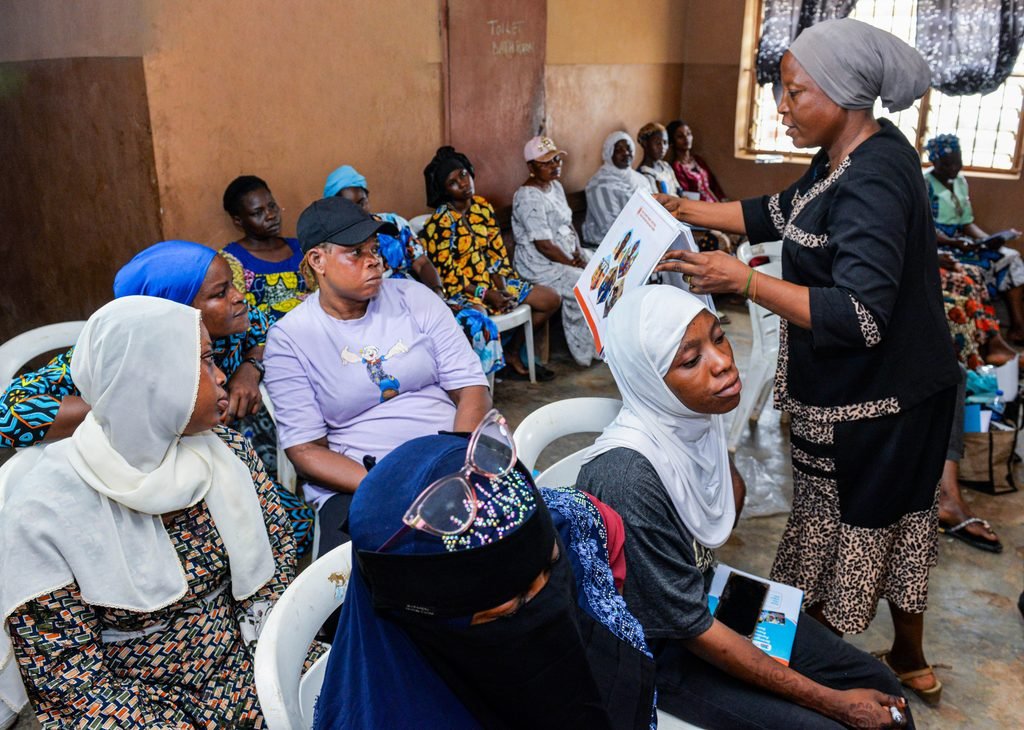
Rather than treating this hesitation as a conversation to avoid, the school management created an opportunity for engagement. The school invited the Community Health Champions to speak with parents at a Parent-Teacher Association (PTA) meeting, giving them an opportunity to explain the importance of vaccination and address concerns.
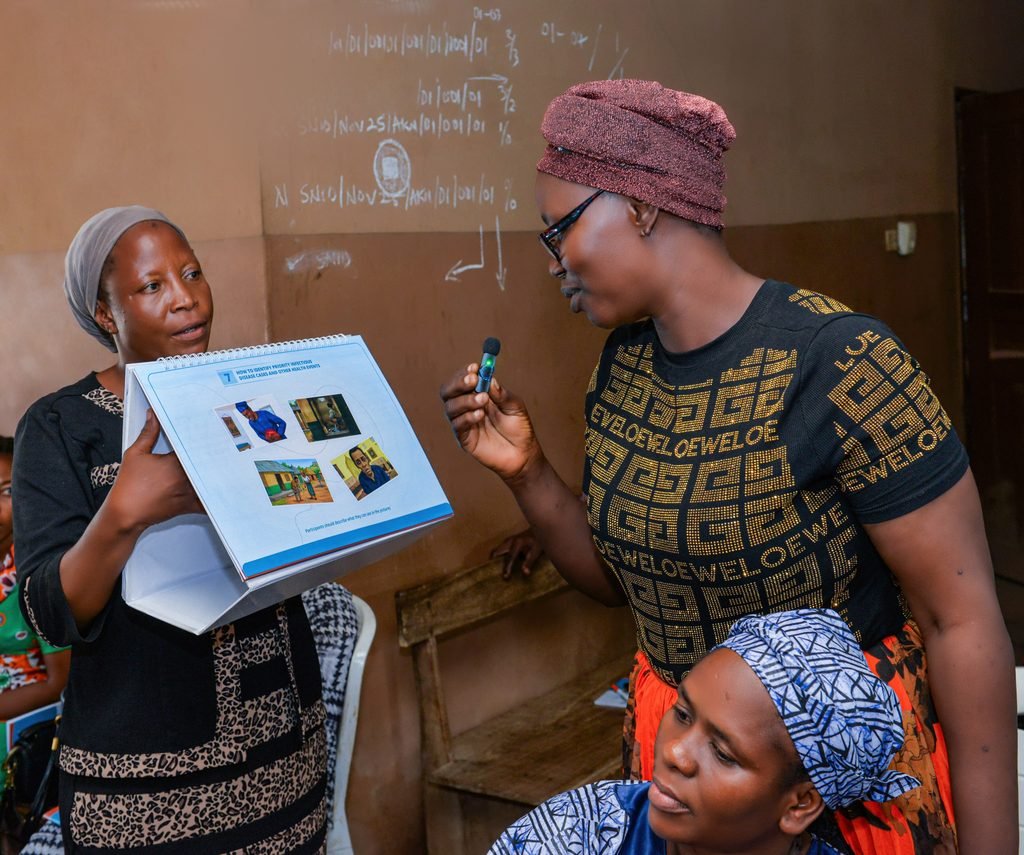
The experience highlights a critical lesson in disease prevention which is that sharing health information is important, but creating opportunities for people to ask questions, understand the risks, and make informed decisions is just as essential.
Through this community-based surveillance model, we are equipping Community Health Champions to apply their training in real-world situations, support disease surveillance and strengthen preventive health practices when public health threats emerge.
And in communities facing the threat of diphtheria, knowing what to look out for and what to do next can make a difference.
Understanding diphtheria: What every family should know
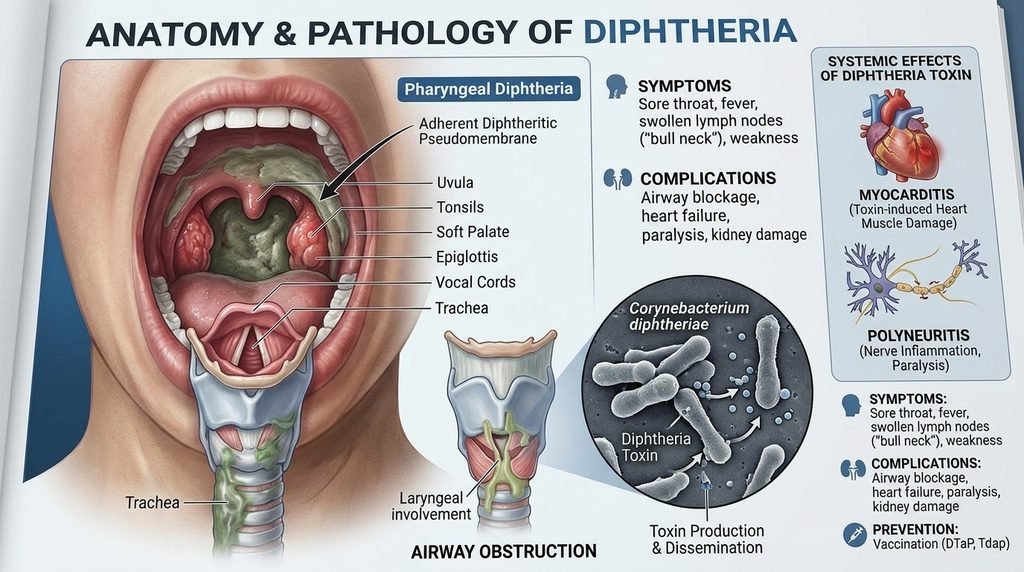
Diphtheria is a serious bacterial infection that commonly affects the nose and throat. It can also affect the skin. The bacteria can produce a toxin that damages body tissues and may cause life-threatening complications, including heart and nerve damage.
The infection spreads from person to person through respiratory droplets released when an infected person coughs or sneezes. Direct contact with infected people, skin sores or contaminated personal items can also spread the bacteria.
Although diphtheria can be dangerous, it is preventable through vaccination. Early recognition and prompt medical treatment are also essential to reducing the risk of severe illness and further transmission.
What are the signs and symptoms of diphtheria?
Symptoms usually appear between two and five days after exposure, although they can take longer to develop. Early symptoms may resemble those of other common infections, which makes it important not to dismiss persistent or concerning symptoms.
Watch out for:
- Sore throat: Pain or discomfort in the throat, which may initially seem mild.
- Fever: An elevated body temperature, sometimes accompanied by weakness or fatigue.
- Swollen glands in the neck: The neck may become visibly swollen or tender.
- A thick grey or white coating in the throat: This is a serious warning sign of respiratory diphtheria, as it can lead to airway obstruction.
- Difficulty swallowing or breathing: These symptoms can indicate a serious infection requiring emergency medical attention.
- Runny nose or cough: These may occur alongside other symptoms.
Diphtheria can sometimes cause skin sores or ulcers. Some infected people may also have few or no symptoms while still carrying and transmitting the bacteria.
Do not wait for every symptom to appear before seeking help. If you suspect diphtheria, especially when someone has a sore throat alongside neck swelling or a greyish coating in the throat, seek urgent medical assessment.
What should you do if you suspect a case of diphtheria?
Knowing how to respond can help protect the affected person and others around them.
1. Seek medical care immediately.
Take anyone with suspected symptoms to a health facility urgently. Difficulty breathing or swallowing is an emergency. Do not wait for symptoms to worsen or attempt to manage the condition with home remedies alone.
2. Reduce contact with other people.
A person suspected of having diphtheria should avoid school, work and social gatherings while awaiting medical assessment and further instructions from health authorities. Avoid close contact, particularly with children and people who may not be fully vaccinated.
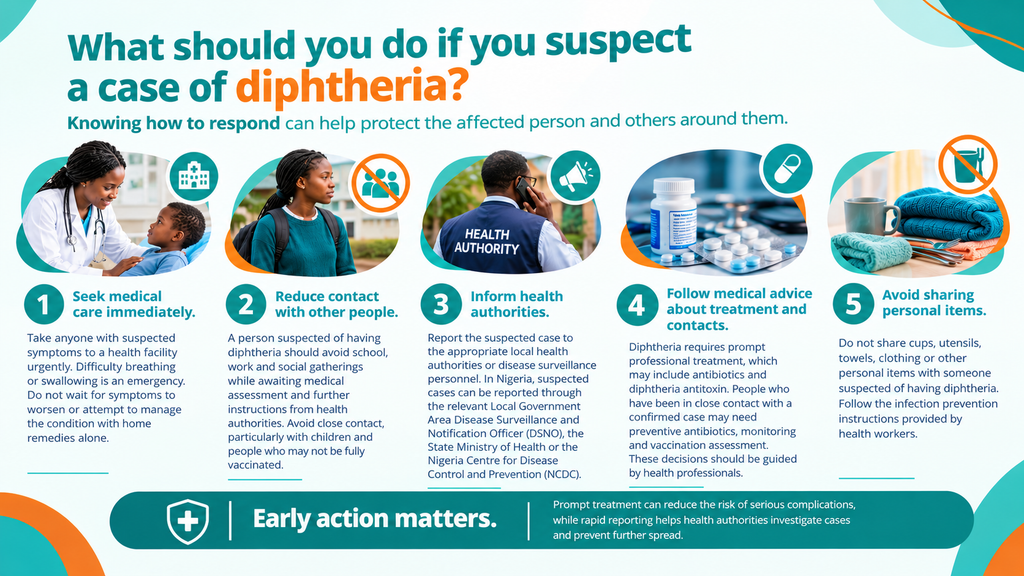
3. Inform health authorities.
Report the suspected case to the appropriate local health authorities or disease surveillance personnel. In Nigeria, suspected cases can be reported through the relevant Local Government Area Disease Surveillance and Notification Officer (DSNO), the State Ministry of Health or the Nigeria Centre for Disease Control and Prevention (NCDC).
4. Follow medical advice about treatment and contacts.
Diphtheria requires prompt professional treatment, which may include antibiotics and diphtheria antitoxin. People who have been in close contact with a confirmed case may need preventive antibiotics, monitoring and vaccination assessment. These decisions should be guided by health professionals.
5. Avoid sharing personal items.
Do not share cups, utensils, towels, clothing or other personal items with someone suspected of having diphtheria. Follow the infection prevention instructions provided by health workers.
Early action matters. Prompt treatment can reduce the risk of serious complications, while rapid reporting helps health authorities investigate cases and prevent further spread.
Vaccination: A vital layer of protection
One of the most effective ways to prevent diphtheria is to ensure that children receive their recommended doses of diphtheria-containing vaccines.
In Nigeria, the pentavalent vaccine is included in the routine childhood immunisation schedule, with doses recommended at six, 10 and 14 weeks of age. Parents and caregivers should check their children's immunisation records and visit a health facility to discuss any missed doses or catch-up vaccination.
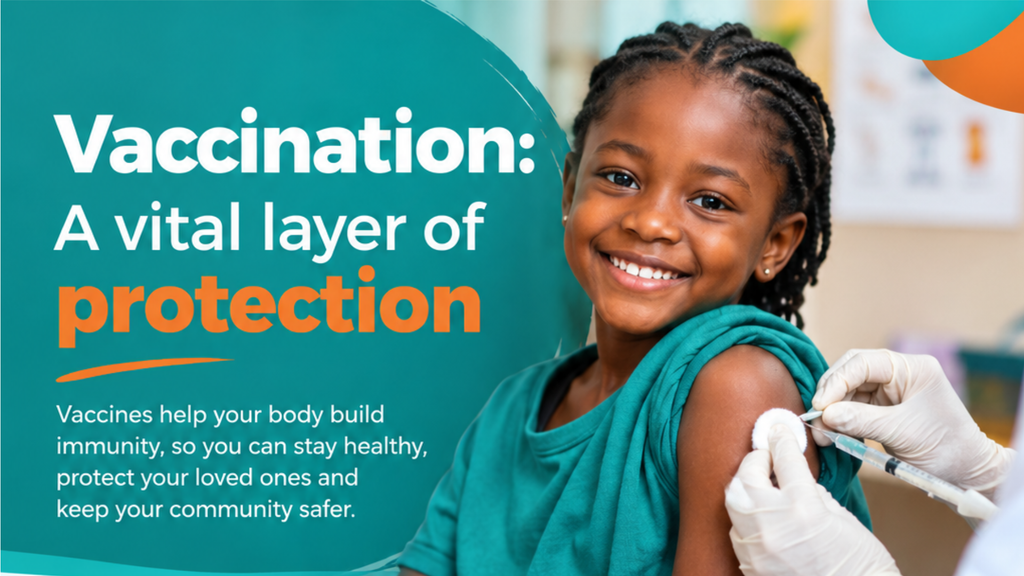
Vaccination is important because diphtheria can cause severe illness, particularly among people who are not adequately immunised. Completing the recommended schedule helps protect children and contributes to reducing the spread of infection within communities.
Parents who have concerns about vaccines should have the opportunity to ask questions and receive accurate information from qualified health workers. Community engagement, clear communication and trusted relationships can help families make informed decisions about vaccination. Schools, health facilities, community organisations and local leaders all have a role to play in supporting these conversations.
Why community participation matters in disease prevention
The response in Ona Ara illustrates why disease prevention cannot depend on health facilities alone.
Household visits can help health workers and community teams reach people with timely information. School sensitisation can help students and teachers recognise warning signs. PTA meetings can provide a space for parents to raise concerns and better understand the value of vaccination.
Community Health Champions can help connect these spaces, bringing public health messages closer to everyday life and supporting communication between communities and health authorities.
Through the Strengthening Community Participation for Disease Prevention and Early Detection (SCOPED) model, the Dr. Ameyo Stella Adadevoh (DRASA) Health Trust is developing Community Health Champions who can apply their training to support disease surveillance and preventive health practices. Their role in Ona Ara demonstrates how community participation can complement the work of local health authorities when a public health threat emerges.
The Champions do not replace health professionals or formal surveillance systems. Instead, they help strengthen the connection between these systems and the people they serve.
That connection matters because the effectiveness of a public health response depends not only on the availability of medical services, but also on whether people receive reliable information, recognise when to seek help and know where to turn.
Protecting communities starts with awareness and action
The response to the confirmed diphtheria case in Ona Ara reminds us that preventing the spread of infectious diseases requires timely information, early reporting, access to appropriate healthcare and strong vaccination coverage.
Every parent who checks a child's immunisation record, every teacher who recognises a warning sign, and every community member who promptly reports a suspected case can contribute to protecting others.
Diphtheria is serious, but communities are not powerless against it. With vaccination, early medical care and collaboration between health authorities and trained Community Health Champions, families can take practical steps to reduce the risk of infection and support a safer, healthier community.
Know the signs. Complete recommended vaccinations. Seek care early. Help stop the spread.
Sources for further information
- World Health Organization: Diphtheria
- Nigeria Centre for Disease Control and Prevention: Diphtheria Public Health Advisory
This article provides general public health information and is not a substitute for professional medical assessment.