The four SayAMR expressions have officially been unveiled.
Explore the expressions, understand their meanings and discover how they can support conversations about antimicrobial resistance across different communities.
Antimicrobial resistance (AMR) is a growing public health challenge, but understanding it should not depend on the language you speak. SayAMR brings together young Nigerians, public health professionals, academic institutions, language experts and communities to develop culturally relevant ways of communicating antimicrobial resistance in Hausa, Igbo, Pidgin English and Yoruba.
Through collaboration, research and community engagement, SayAMR seeks to make AMR easier to understand and discuss, bringing the conversation closer to the people it affects.
Antimicrobial resistance occurs when microorganisms such as bacteria, viruses, fungi and parasites change over time and no longer respond to medicines that were previously effective against them.
Although AMR is a major public health concern, communicating what it means and why it matters can be challenging, particularly when technical language creates barriers to public understanding.
For many people, understanding a health issue begins with being able to explain it in familiar terms. When scientific concepts are difficult to communicate in everyday language, important public health messages may not reach or resonate with everyone.
SayAMR seeks to bridge this communication gap by exploring how antimicrobial resistance can be expressed in locally relevant languages, making the science easier to understand and discuss across different communities.
"Understanding is an important first step towards action."
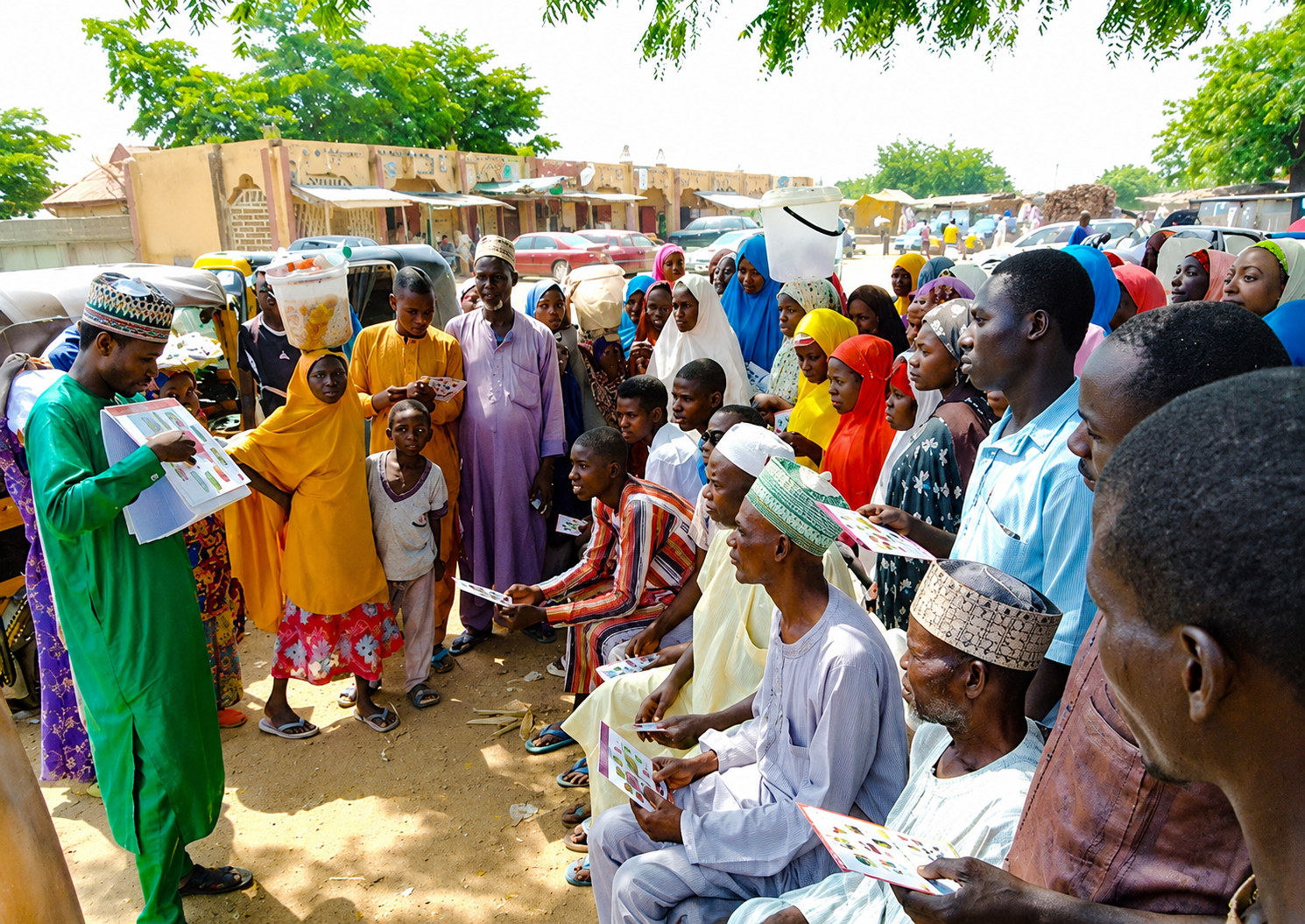
SayAMR is a collaborative initiative designed to make antimicrobial resistance easier to communicate and understand across Nigeria's diverse linguistic and cultural contexts.
At the heart of the initiative is the SayAMR Language Hackathon, a youth-led university challenge that invited students to develop locally relevant terminology for antimicrobial resistance in four languages: Hausa, Igbo, Pidgin English and Yoruba.
The initiative recognises that developing meaningful public health terminology requires more than translating scientific expressions. It requires bringing together scientific knowledge, linguistic expertise, cultural understanding and community perspectives.
Through this process, university students, public health professionals, language experts and communities have contributed to exploring how a complex scientific concept can be communicated in ways that resonate with everyday experiences.
Zaria, Kaduna State
Nsukka, Enugu State
Ilorin, Kwara State
Odeda and Abeokuta South, Ogun State
A Nigeria where people can understand antimicrobial resistance and participate in addressing it, regardless of the language they speak. Four languages, one shared purpose.
SayAMR was conceived through conversations among three women who recognised the need to make antimicrobial resistance more accessible through language.
 Mrs Niniola Williams
Managing Director, DRASA Health Trust
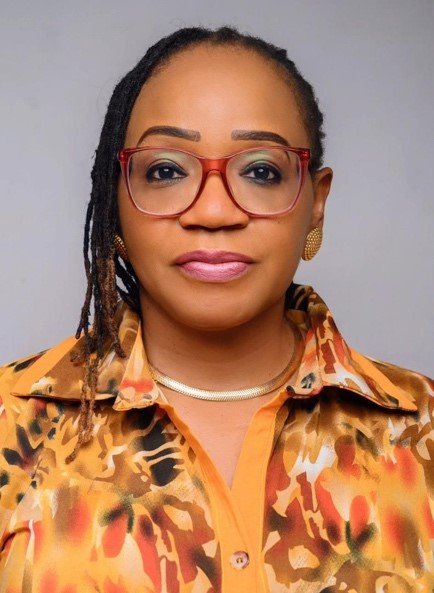 Dr Tochi Okwor
Head of Health Promotion and Disease Prevention, Nigeria Centre for Disease Control and Prevention (NCDC)
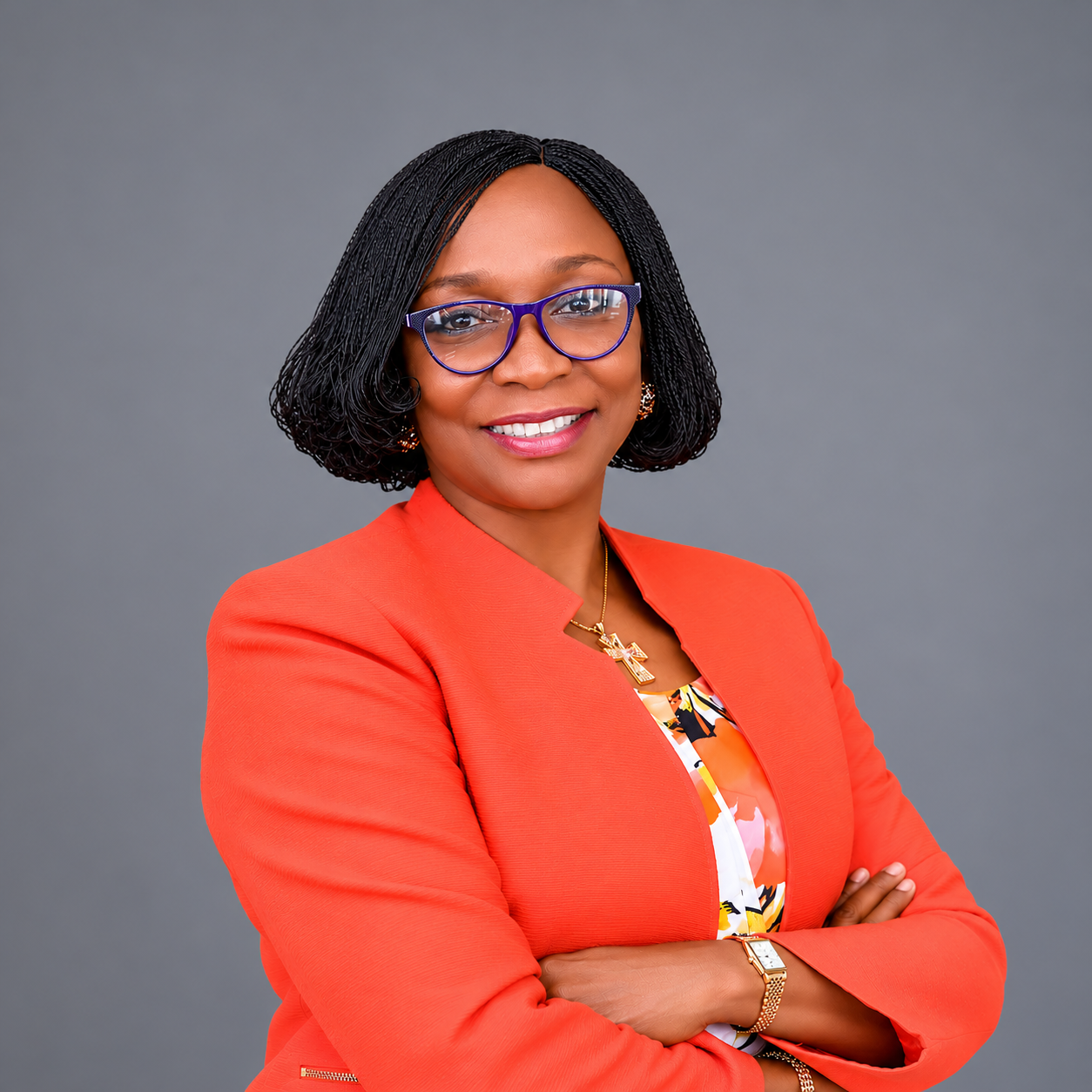 Prof Folasade Ogunsola
Director, Centre for Infection Control and Patient Safety (CiCaPS)
Their shared vision laid the foundation for a collaborative process that brought together universities, young people, public health experts, language specialists and communities. What began as an idea grew into a collective effort to explore how a complex public health concept could be communicated in ways that resonate with people across Nigeria.
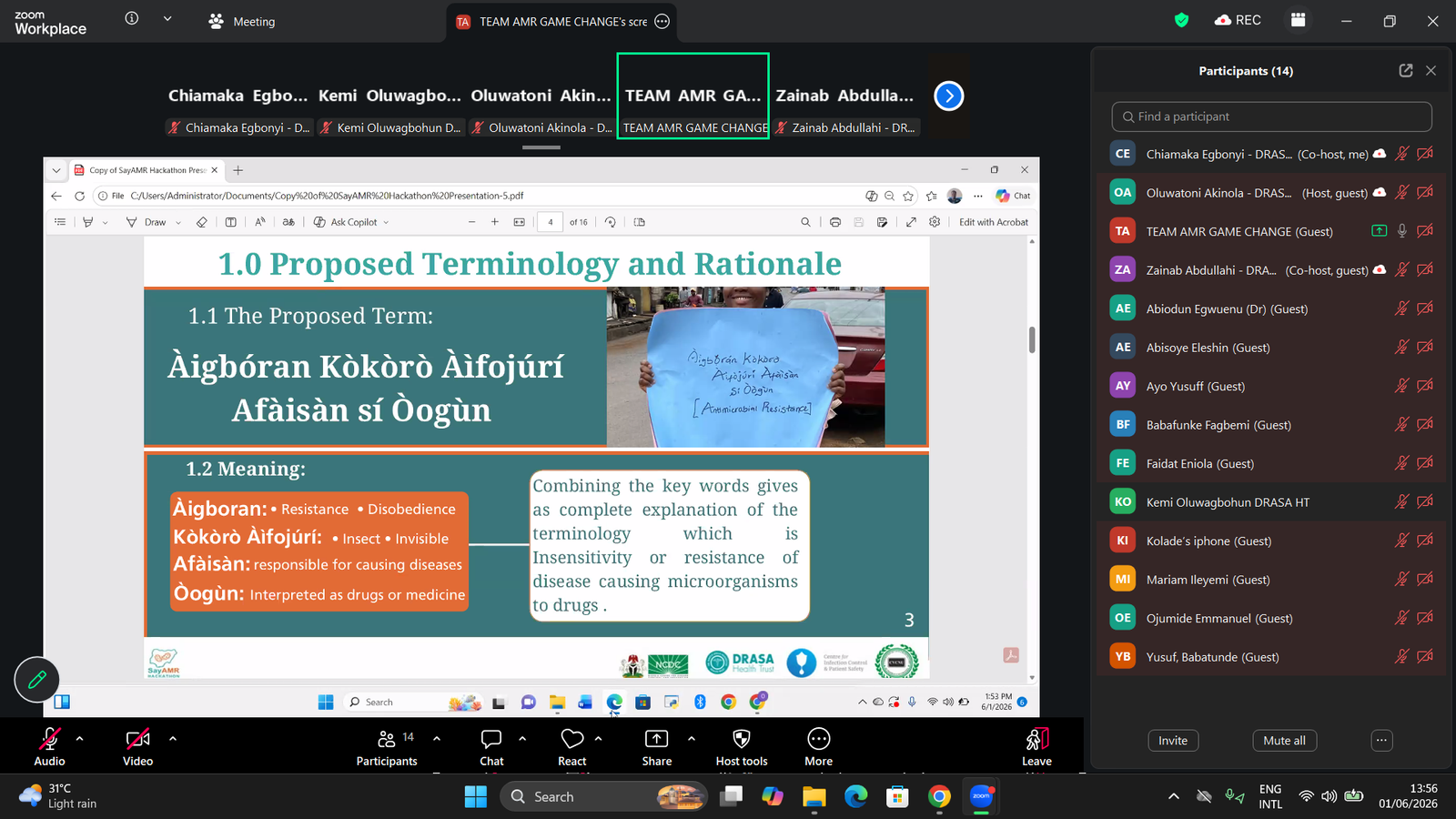
Developing terminology that accurately communicates antimicrobial resistance while reflecting local languages and cultural contexts required a structured and collaborative process. From the initial call for submissions to expert deliberations and community engagement, each stage provided an opportunity to examine, assess and strengthen the proposed expressions.
The journey brought together university students, public health experts, language specialists, academic institutions and communities to ensure that the process considered both scientific accuracy and everyday understanding.
Swipe or scroll sideways to follow the stages →
The SayAMR Language Hackathon invited university students and young people to contribute ideas for expressing antimicrobial resistance in Hausa, Igbo, Pidgin English and Yoruba.
Participants drew on their understanding of language, culture and public health to develop expressions that communicate the concept in familiar and meaningful ways.
The initiative received 35 submissions across the four target languages.
Each went through an initial eligibility review against the requirements of the challenge before progressing to technical review.
A structured Delphi review involving experts assessed submissions against four criteria:
Structured debates and deliberations examined competing proposals, discussed their strengths and limitations, and built consensus around the preferred expressions.
The proposed expressions were taken beyond academic and technical review to community members across the four language groups.
Activities explored how people interpreted the expressions, whether they found them understandable and acceptable, and how well they could be used in everyday conversations.
Feedback from community validation provided insights into how the expressions were understood.
Where necessary, it informed further refinement to strengthen clarity, acceptability and relevance.
The culmination of the process is the official unveiling of the four expressions ahead of the 5th Global High-Level Ministerial Conference on AMR.
It presents the outcomes of the collaborative process and encourages wider engagement with the terminology.
A key part of the SayAMR process was ensuring that the proposed terminology could be understood and meaningfully used beyond academic and technical settings.
Community validation activities brought the proposed expressions directly to people in different locations, creating opportunities to assess their understanding, acceptability, memorability and relevance. Participants of different age groups and backgrounds shared how they interpreted the expressions and whether they could use them in everyday conversations. These interactions reinforced the importance of community participation in developing public health communication that is accessible, meaningful and culturally relevant.
Four languages. Multiple communities. One shared objective: making AMR understandable.
Swipe or scroll sideways to view all communities →
Community validation activities in Zaria engaged participants across different communities to assess the understanding, acceptability and memorability of the proposed Hausa expression.
Direct engagement with participants and group discussions in Nsukka explored how the proposed Igbo expression was understood and interpreted.
Engagements in Odeda and Abeokuta South gathered feedback on the clarity, acceptability and cultural relevance of the proposed Yoruba expression.
Participants across different settings in Ilorin helped assess the clarity, acceptability and contextual relevance of the proposed expression, and identified where additional explanation might help.
After months of collaboration, technical review, deliberation and community engagement, SayAMR will officially unveil the expressions developed through the initiative.
The unveiling marks an important milestone in the effort to make antimicrobial resistance more accessible through language. It represents the culmination of contributions from young people, academic institutions, public health professionals, language experts and communities.
Follow the SayAMR journey and join us as we take an important step towards making antimicrobial resistance easier to understand and communicate.
The four SayAMR expressions have officially been unveiled.
Explore the expressions, understand their meanings and discover how they can support conversations about antimicrobial resistance across different communities.
Explore each expression, understand its meaning and context, listen to its pronunciation and discover how it can be used in everyday conversations about antimicrobial resistance.
[Official expression]
[Official expression]
[Official expression]
[Official expression]
Access the SayAMR terminology handbook, downloadable explainer cards, approved AMR communication materials, audio pronunciation files, unveiling photographs, video highlights and other approved publications.
The SayAMR journey does not end with the unveiling. The expressions developed through this initiative provide an opportunity to strengthen how antimicrobial resistance is discussed, understood and communicated across different settings, supporting more inclusive public health communication and wider participation in addressing AMR.
Swipe or scroll sideways to view all areas →
Making AMR awareness messages more accessible and relatable to different audiences through locally relevant language.
Supporting conversations about AMR among students and educators, and encouraging accessible AMR communication in learning and awareness activities.
Encouraging the use of locally relevant language in storytelling, broadcasting, digital content and public education.
Supporting discussions about AMR within households and communities in familiar language.
Strengthening stakeholder engagement, public awareness and participation in AMR prevention and control efforts.
Organisations, institutions and individuals can contribute by supporting the communication, understanding and appropriate use of SayAMR terminology.
SayAMR is made possible through collaboration between public health institutions, academic organisations, young people, technical experts and communities.
Swipe or scroll sideways to view all partners →
An organisation working to strengthen health systems and improve health outcomes through initiatives that promote antimicrobial resistance awareness, infection prevention and control, health security and community engagement.

Nigeria's national public health institute, contributing public health expertise and supporting efforts to strengthen the country's response to antimicrobial resistance.

Contributing academic and technical expertise to the initiative.

Supporting university engagement and collaboration in the SayAMR initiative.
SayAMR also acknowledges the participating university teams, expert reviewers, language specialists, community participants and other contributors whose involvement has shaped the initiative.
SayAMR is an initiative aimed at making antimicrobial resistance easier to understand and communicate through culturally relevant terminology in Hausa, Igbo, Pidgin English and Yoruba.
Technical public health terminology can be difficult to understand. Locally relevant expressions can help bridge communication gaps and support more meaningful conversations about AMR.
The expressions emerged through a collaborative process involving university students, expert reviewers, structured deliberations and community validation.
The initiative focuses on four languages: Hausa, Igbo, Pidgin English and Yoruba.
The initiative brought together DRASA Health Trust, NCDC, CICAPS, CVCNU, university teams, public health professionals, language experts and community participants.
[Insert approved response following confirmation of the official unveiling date.]
The approved expressions and accompanying resources will be made available following the official unveiling. Organisations should refer to the published materials for guidance on appropriate use.
You can support SayAMR by sharing approved AMR communication materials, encouraging conversations about AMR in your community and exploring opportunities to collaborate with the initiative.
© 2026 Dr. Ameyo Stella Adadevoh Health Trust - All Rights Reserved.