


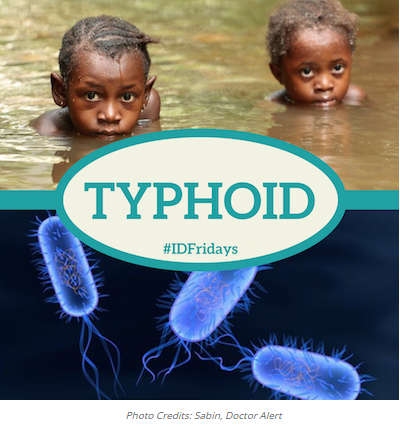
You can get this illness from the food you eat and the water you drink
Name
Typhoid fever
Transmission
- A serious illness caused by a bacteria called Salmonella Typhi that can spread throughout the body and affect many organs
- The Salmonella Typhi bacteria live in humans (in the bloodstream and intestinal tract) and exit the body in the feces of infected people
- The bacteria spread when others eat food or drink liquids that have been handled by an infected person and are contaminated with Salmonella Typhi
- The bacteria can also spread if sewage contaminated with SalmonellaTyphi gets into the water used for drinking or washing food
- This pollution of water sources often results in typhoid fever epidemics when large numbers of people use the same water source
Geography
Worldwide
- Common in most countries except industrialized nations such as United States, Canada, western Europe, Australia, and Japan
- Highest risk is in south Asia
Incubation Period
6 – 30 days after infection
Signs and Symptoms
- Fever
- Weakness
- Rash
- Stomach pains
- Headache
- Loss of appetite
- Insomnia
- Constipation (more common in older children and adults)
- Diarrhea (more common in younger children)
Diagnosis
Laboratory testing of blood or feces samples to identify the bacteria
Treatment
- It can usually be treated with antibiotics
- Sometimes treatment lasts 4 to 6 weeks
Prognosis
- Without treatment, people may continue to have a fever for weeks or months, and as many as 20% may die from complications of the infection
- Complications include intestinal bleeding, pneumonia, meningitis, hallucinations, and sepsis
- Around 2–5% of those recovered become chronic carriers of the bacteria, as the bacteria continue to live in their bodies even after symptoms have resolved
- In these cases, the illness can return and they can continue to infect others with the bacteria
Prevention: What Can You Do?
- Washing your hands, ensuring food is properly cooked, and maintaining a clean supply of water are important ways to prevent infection
- There is a vaccine and it is recommended if you are traveling to a country where typhoid is common
- The vaccine is not 100% effective so in addition you need to be careful with what you eat and drink
Typhoid In the News
- Typhoid Fever: Merciless Killer On The Rise
- Typhoid outbreak confirmed
- 10 Things You May Not Know About “Typhoid Mary”
Sources:
https://www.cdc.gov/typhoid-fever/
http://www.who.int/immunization/diseases/typhoid/en/