Year 2022

Receiving the Inaugural Africa CDC – DRASA Continental Award for Emergency Health Workers in Africa
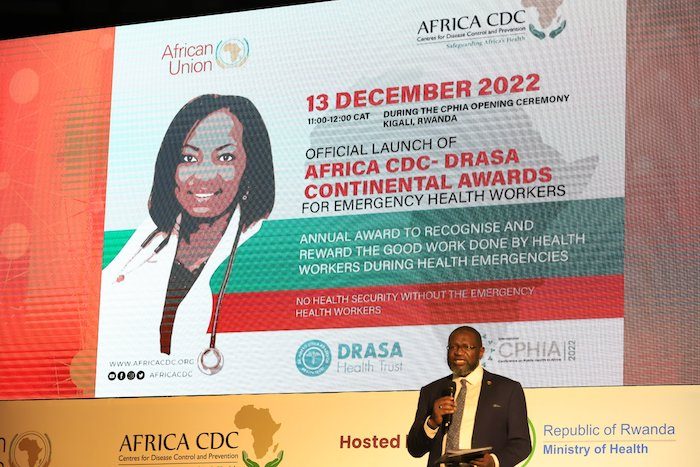
In recognition of her role and sacrifice in containing the first case of the West African Ebola Virus Disease epidemic in Nigeria, Dr. Ameyo Stella Adadevoh (OON), received the first Africa CDC-DRASA Health Trust Continental Award for Emergency Health Workers on Tuesday, December 13th. The award presentation, which marked the official launch of the annual Award for Emergency Health Workers, took place during the 2nd International Conference on Public Health (CPHIA), held in Kigali, Rwanda, Africa’s land of a thousand hills. Dr. Adadevoh previously earned posthumous recognitions from the government of Nigeria–the National Productivity Order of Merit Award and the Officer of the Order of Niger Award in 2022– however this award is the first of its kind for the continent to honor African health workers who play a major role in securing our health security in the face of public health threats. An award by Africans, for Africans. Receiving the award on her behalf were DRASA’s Chairman of the Board, Mr. Bankole Cardoso and Managing Director, Niniola Williams. Presenting the award at the event, Dr. Ouma Ahmed Ogwell, Acting Director of the Africa CDC, appreciated the efforts of Dr. Adadevoh and highlighted that the initiative of recognizing and rewarding emergency health workers will continue to take place yearly, through a series of careful nominations and selections. “This award is named after Dr. Ameyo Stella Adadevoh, a Nigerian physician, who in 2014, during the devastating Ebola outbreak in W. Africa, managed the first patient in Nigeria, got infected in the process, and died. Succumbing to the disease, in her words she said it was ‘For the greater public good’. There is no greater sacrifice than giving your life knowingly so that you can protect 200 million Nigerians and over 1 billion Africans… We at Africa Centres for Disease Control and Prevention (Africa CDC) have decided […]

Global Handwashing Day 2022: Educating 1566 Students, 84 Teachers, and 60 Traders

“Life and death are in our hands.”“Clean hands save lives.” Our hands play vital roles in our daily lives. From touching, grasping, holding, and working, they help us spread germs–which are almost everywhere–from person to person. However, this risk of our hands carrying and spreading germs can be managed through proper handwashing procedures. Global Handwashing Day (GHD) is a global advocacy day set aside to increase awareness about the importance of handwashing and to trigger lasting change and community-driven action. Every year, DRASA Health Trust commemorates this day as part of our scope of work in Infection Prevention and Control (IPC) and Water Sanitation and Hygiene (WASH). This year, the theme Unite for Universal Hand Hygiene highlights the need for collaboration of different stakeholders to ensure that regular handwashing is incorporated at all levels: from policy all the way down to our communities. As such, our team visited 6 schools and also a market. The schools selected were part of our 2021/22 AMR School Program in both Lagos and Osun States; 4 schools were selected from Lagos and 2 schools in Osun state. The schools were Ansar Ud Deen Senior High School Surulere (Lagos), Apapa Senior High School Apapa (Lagos), Estate Senior Grammar School Ilupeju (Lagos), Matori Senior Grammar School Isolo (Lagos), Anglican Commercial Grammar School Osogbo (Osun) and Our Lady’s Girls High School, Modakeke (Osun). The market outreach was done at the Arena Market, Oshodi, Lagos. The purpose of this outreach was to advocate for increased awareness and adoption of best sustainable practices, policies, and structures to promote hand hygiene not just within our communities but at a systems level. According to the US Centres for Disease Control, washing hands with soap and water regularly could reduce deaths from diarrheal diseases by up to 50%  and prevent up to 1 million deaths […]

2022 National Honors List: Dr. Ameyo Stella Adadevoh Receives Officer of The Order of Niger Award

On Tuesday, 11th October 2022, Dr. Ameyo Stella Adadevoh received the Posthumous National Honor of Officer of the Order of Niger (OON). This was conferred by His Excellency, President of The Federal Republic of Nigeria, President Muhammadu Buhari. Dr. Adadevoh has now joined other prominent awardees found worthy of the various prestigious national honors conferred by the Federal Government of Nigeria for distinguishing themselves through their service to the nation, humanity, and their contribution to national development. The event, which took place at the International Conference Center in Abuja, had 450 Nigerian and non-Nigerian awardees in various categories. About 100 other Nigerians, along with Dr. Adadevoh, also received the OON Award. These National Awards are the first to be conferred since the inception of President Muhammadu Buhari’s government in 2015. This also happened just five months after Dr. Adadevoh received the National Productivity Order of Merit (Posthumous) Award. For love, duty, and country we are grateful that the life, labors and legacy of Dr. Ameyo Stella Adadevoh (OON) were not in vain as we continue to celebrate her through our work and commitment to keeping our nation healthy and safe. On her behalf,  the DRASA Health Trust Board Chairman, Bankole Cardoso, received the award. “It’s been about 8 years. And to still get this recognition is very nice for me and my family and I’m sure she’s happy.” expressed Bankole Cardoso while speaking to the Arise News crew at the event.  

Walking The Talk On Medication Safety: Collaborating With Federal Ministry of Health, Others, To Celebrate World Patient Safety Day

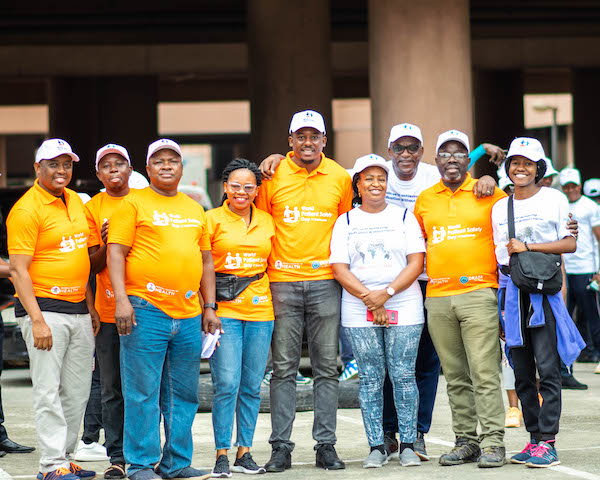
“Drugs should be used in the right doses, for the right diagnoses, on the right patient, and at the right time. If we don’t obey these rights, potions can very quickly become poisons. It’s a very thin line.” –Dr. Asekhame Sonny Isemede Medications play a critical role in achieving the ultimate goal of healthcare: to prevent diseases, protect health and help people recover from their illnesses. Whether it be for curing a condition, managing symptoms, or repairing body function, medications help keep patients safe and well. However, as the World Health Organization reports, the harm caused by unsafe medication accounts for half of the overall preventable harm in medical care. Up to 42 billion US dollars of total health expenditure can be avoided worldwide if we prevent medication errors. In Nigeria, a recent study reveals that the overall incidence of adverse drug events (ADEs) is unknown and poorly documented, alongside an identified 47% prevalence of self-reported medication errors amongst healthcare practitioners. Therefore, patients and their families must be informed about uncertainties, risks, and treatment choices. In line with our commitment to protecting health and preventing diseases, in collaboration with the Federal Ministry of Health (FMOH), the Nigeria Centre for Disease Control (NCDC), Centre for Infection Prevention and Patient Safety (CICAPS), and Patient Safety Africa, we commemorated this year’s World Patient Safety Day (WPSD) with the theme Medication Safety and the slogan Medication Without Harm. As a key partner playing an active role in Infection Prevention and Control, of which Patient Safety is a core component, we joined in this year’s WHO Global Patient Safety Challenge: Medication Without Harm to help all stakeholders – patients, practitioners, policymakers and the public – see and understand safety and quality from various perspectives, most especially, from the eyes of patients. We also focused on the need to adopt a systems approach and […]

Making People Part of the Process: Strengthening Cross-Border Collaborations for Health Security Through Community Involvement

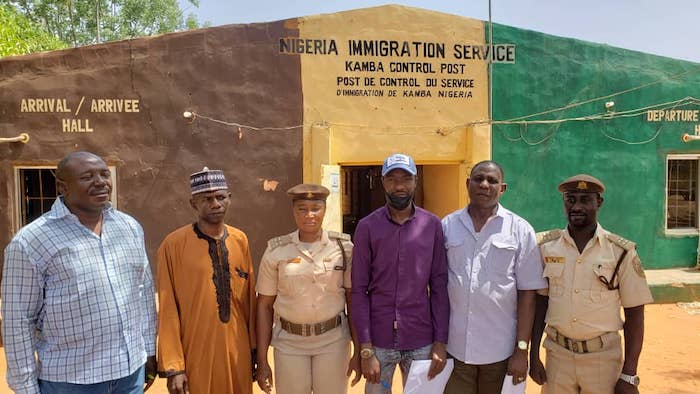
“Go to the people. Live with them. Learn from them. Love them. Start with what they know. Build with what they have. …When the work is done, the task accomplished, the people will say ‘We have done this ourselves.” –Lao Tzu Imagine if it was possible for all travelers moving from one country to another to pass freely through their borders. How would we quickly identify and contain sick people, animals, infected cargo and products as they cross through these entry points? One easy way to ensure this is to work with the people residing in border communities. When they are educated and equipped, they become health champions who are aware of the signs and symptoms of infectious diseases and can identify them, prevent their spread, as well as notify the necessary public health authorities for further management and action. This will stop the spread of infections within and across communities around the country. Community influencers at one of Nigeria’s land borders As part of our ongoing health security activities, we identified key groups of local leaders and influencers in 6 border communities namely;  Jibia (Katsina), Kamba (Kebbi), Illela (Sokoto), Maigatari (Jigawa), Idiroko (Ogun) and Seme Border (Lagos), who we worked with to help identify, prevent and manage disease outbreaks in the communities. We actively engaged with some of these community influencers through our advocacy visits and they assured us of their support and commitment to helping secure the country’s health. Our team identified more than 17,600 stakeholders, including religious leaders, market union heads, road transport workers and officials, Miyetti Allah, staff of primary health centres and general hospitals, health educators and community volunteers, among others. Of the various categories of people, market unions, road transport workers, and hospitals constituted a large number of the stakeholders identified. Community stakeholders at 3 […]