Year 2021

A Spelling Bee Competition to Spread Awareness, Stop the Resistance: Antimicrobial Awareness Week
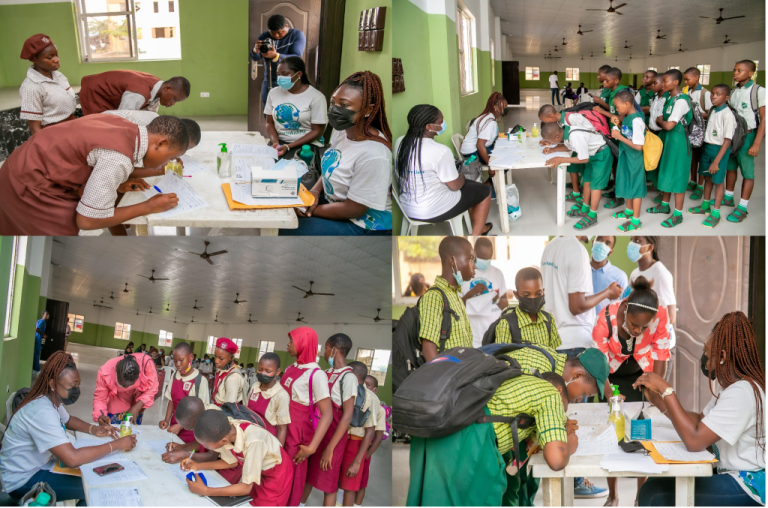
World Antimicrobial Awareness Week (WAAW) is an annual event that takes place globally from the 18th – 24th of November to increase awareness of antimicrobial resistance (AMR) which is considered the “silent pandemic” spreading rapidly around the world. The goal of WAAW is to educate and encourage best practices among the general public, health workers, animal health professionals, farmers and policy makers to avoid the further emergence and spread of drug-resistant germs and infections. We chose Tuesday 23rd November, 2021 to host an inter-school spelling bee competition to commemorate this year’s WAAW. Our goal was to engage young people as key stakeholders in the fight against antimicrobial resistance and to increase awareness and understanding of antimicrobial awareness, as well as highlight the role each individual can play in this public health challenge. The competition was held in two categories (Junior and Senior) from 4 public schools in Lagos State and each school was represented by 13 students (5 contestants and 8 supporters), making a total of 52 student participants during the event. The competition featured some words from public health and medicine that were easy to spell and relatable for participants, as well as more difficult words which they learnt during the event, thereby creating an atmosphere filled with excitement and knowledge sharing for the students. The competition was filled with highlights including a tie breaker for the senior category to decide the 1st and 2nd runner up after a tie in the final round of the competition. Check out the recap video here: At the end of the spelling bee, we gave gifts to the students which included branded notebooks and certificates of participation, cash rewards and certificates of achievement for the top 3 contestants in each category (Junior and Secondary), and a plaque for the winning schools. Check […]
Wash Your Hands to Protect Your Future: Global Handwashing Day

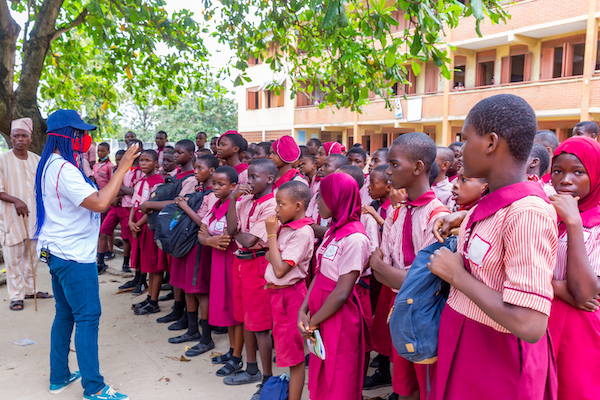
Global Handwashing Day is an event that happens on the 15th of October every year to remind everyone about the most effective and simplest technique we can use to reduce or avoid the spread of germs: handwashing. Over the years, DRASA Health Trust has partnered with Ikeja Electric and Kleanmate to commemorate Global Handwashing Day, and we did it again in 2021! Our goal is to encourage people to make handwashing an everyday practice. Considering the ongoing COVID-19 pandemic, handwashing cannot be overemphasized. Washing your hands is an important part of preventing the spread of COVID-19, but it will also prevent you from catching other diseases. Handwashing saves lives and protects your future. This year, we celebrated the day with 263 students from two schools in Okota, Lagos. We taught them the importance of handwashing and the proper way to wash their hands: using liquid soap and clean running water to wash for at least 40 seconds. At the end of our demonstration, questions were asked and gifts were given to participating students. Here’s a video recap of the day! Do you know how to wash your hands? If not, the following will guide you: Steps for handwashing The 6 areas to wash (can be done in any order)

Recognition for Our Public Advocacy Work

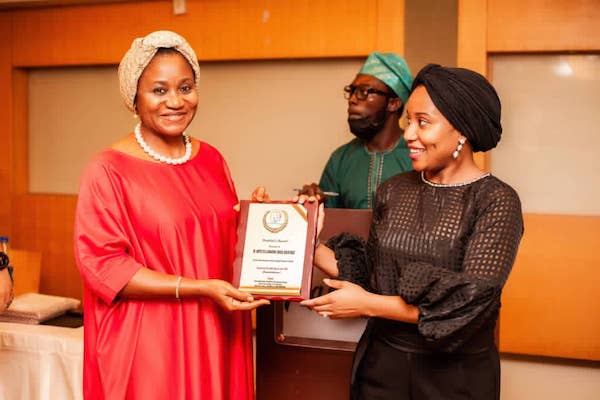
On Sunday the 18th of July, 2021 we were honored with an award from the Social Millennials Network for our advocacy on infectious disease prevention and control. The Social Millennials Champagne Soiree & Awards 2021 was organized to honor and recognize member organizations that had distinguished themselves in their social impact work. Professor Oluwatoyin Ogundipe – Vice-Chancellor of the University of Lagos – gave a keynote speech on the role of the middle class as the bastion of hope for Nigeria. He was also given an Award of Excellence by Ini Abimbola – the Social Millennials Special Mentor – in recognition and appreciation of his indelible leadership at the helm of the University of Lagos. Also present at the event was Dr. Akintoye Akindele (Guest of Honor), Kemak Onyenaucheya (Convener/ President, Social Millennials Network), Clare Henshaw (Vice-president, Social Millennials Network), Mrs. Mary Akpobome (Special Guest Mentor), Mrs. Raliat Oyetunde (Special Guest Mentor), Dr. Benjamin Olowojebutu (Executive Member, Social Millennials Network), Hon. Adetola Salau (Senior Special Assistant (Education) to the Governor of Lagos State) and Hon. Oloruntoyosi Thomas (Special Guest). Member organizations who received the President’s Award 2021 included: Donors For Africa, Dolly Children Foundation, Truss Empowerment Foundation, Mamamoni, and DRASA Health Trust for our invaluable advocacy on infectious disease prevention and control. It was a night of wisdom and insight as members left refueled to do more in their spheres of impact. Click below for more pictures from the event.

Protecting Healthcare Workers: A Need for Urgent Action

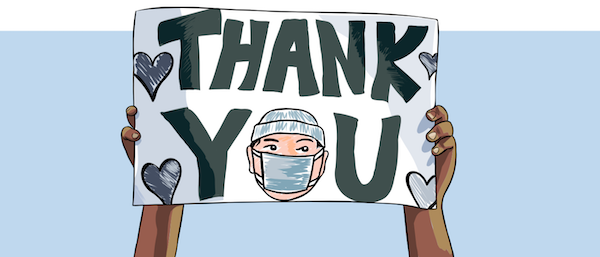
Health workers all over the world are on the frontlines of a battlefield, risking their lives to save others. We call them our heroes but what are we doing to keep them safe? The COVID-19 pandemic keeps reminding us of the extremely important role health workers play in keeping patients and communities safe and treating sick people. But quite unfortunately, these health workers are not always well equipped or well supported and the virus has exposed many of them and their families to high levels of risk. Resolve To Save Lives, a global public health initiative, partnered with us, DRASA Health Trust and other organisations to launch a report describing the state of health workers globally and calling for immediate action to support them. Under-resourced and overwhelmed, working in situations of extreme pressure, health workers around the world are making the ultimate sacrifice and paying with their lives. According to the report, as of September 2020 at least 7,000 health workers globally died fighting COVID-19 while others faced attacks from people not pleased with the public health measures put in place to control the virus. The report outlines problems health workers currently face – from a lack of protective equipment and other tools to keep themselves safe to working without infection prevention and control training to not having psychological support to deal with the emotions and stress of working on the frontlines. The report also recommends urgent actions that stakeholders including governments, health systems, and funders must implement to address them. These recommendations fall into 4 main categories: We call on every stakeholder to implement targeted strategies that will protect our health workers. We need to make an increased effort because: “Knowing is not enough; we must apply. Willing is not enough; we must do” – Goethe